Marine Conservation Platform
A comprehensive digital platform designed to protect marine ecosystems and promote sustainable fishing practices in the Maldives.
Services
Product Design
- User Research
- UX Strategy
- Interface Design
- Design System
Development
- Frontend Development
- Backend Architecture
- Data Visualization
- API Integration
Methods
- User Interviews
- Prototyping
- Usability Testing
- Iterative Design
Deliverables
- Interactive Dashboard
- Mobile App
- Analytics Platform
- Admin Portal
Industry
Marine Conservation
We collaborated with the Blue Marine Foundation to create a revolutionary platform that helps monitor and prevent overfishing in the Maldives. The solution combines real-time data tracking with user-friendly interfaces for both conservation teams and local fishing communities.
View OnlineHow might we prevent overfishing in the Maldives during COVID-19?
Disruption to tourism meant a reduction in imported food supplies to the islands. This sparked a rapid increase in fishing from the native population.
Understanding the challenges
We started by facilitating a series of workshops to understand the challenges and goals of the campaign. We began with lightning talks from local experts in the field – marine biologists, conservationists and researchers. Insights were captured as ‘how might we’ questions to help frame the challenges into opportunities. We looked at inspiring ideas from previous campaigns or products and mapped these against an effort/impact matrix to help us understand where the value lies.
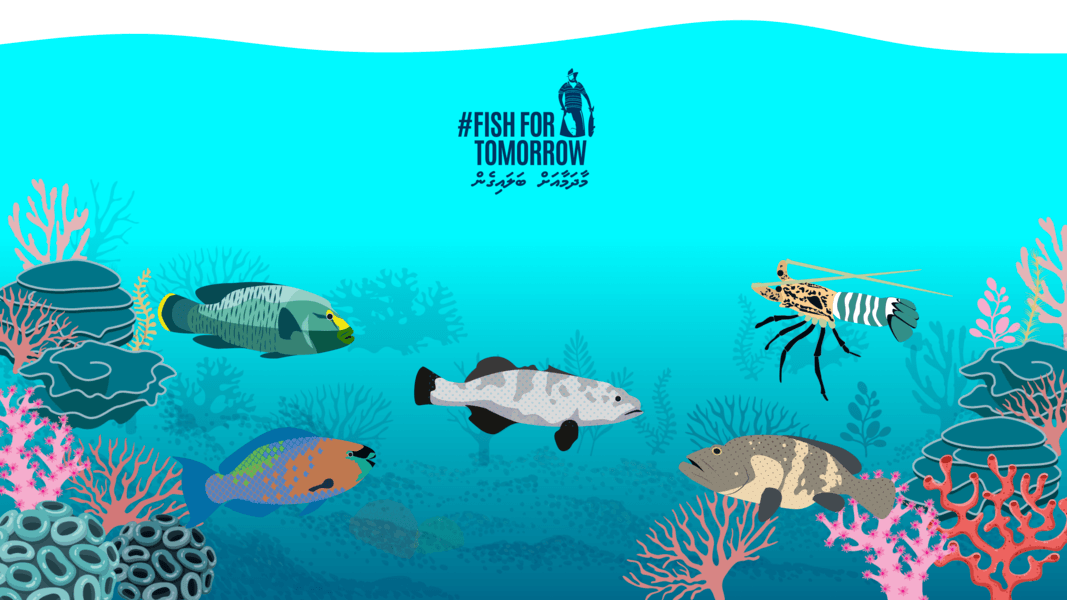
One of the challenges was the environmental considerations and any cultural nuances we should be aware of. Working closely with the research team in the Maldives we created empathy maps to deeper understand the user needs and profiled some mindsets based on our learnings. We also absorbed facts about the endangered fish and made sure we were absolutely clear on size, age and species that were safe to catch.
Converge and diverge
The ideation workshop began with a series of ‘brainwriting’ sessions. This method quickly captures lots of ideas for each mindset in note form. We then used dot voting to decide which ideas were the strongest. These ideas were then used to generate a series of ‘crazy eights’. We followed the same process of dot voting the strongest ideas.
We then elaborated on these ideas using the ‘T-bar’ method which expands on a single idea in more detail. We collectively fed back on each idea and reached a mutual agreement on the ones to bring forward.
Finally, we used storyboards to help describe the scenario and user flow of the chosen idea.
Impact
The campaign achieved remarkable results:
- 27,000 people actively responded to the campaign
- Over 4.5 million impressions
- Reached over 100,000 people (a third of the native population) within 24 hours
- 30,000 users engaged with deep-learning assets (game/hub)
- Nearly 10% of the Maldives’ native population participated
It was BLUE’s best performing campaign to date, demonstrating the power of combining thoughtful design with environmental conservation.